
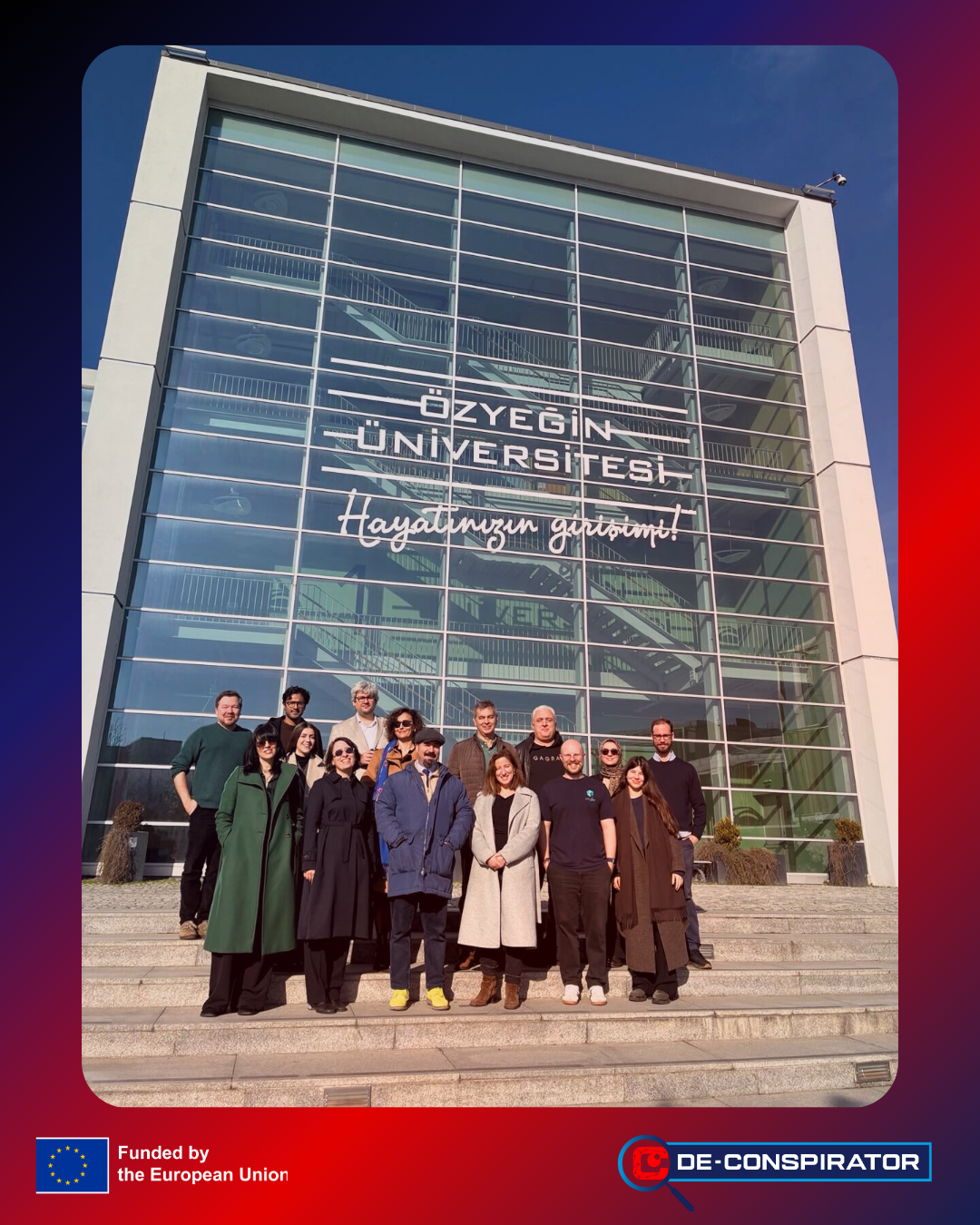
DE-CONSPIRATOR M24 Annual Consortium Meeting in Istanbul
Day 1: Setting the Stage and Reviewing Progress
The first day of the meeting focused on reviewing project progress and reinforcing the foundations required for the successful delivery of the project’s final phase. Partners engaged in interactive discussions, reflecting on the achievements and lessons-learned so far, identifying the key actions and agreeing on the priorities for the months ahead.
Akin Unver, Project Coordinator and Associate Professor of International Relations at Özyeğin University (OZU), welcomed the consortium partners and set the foundations for the two-day consortium meeting.
The agenda for the first date included presentations with interactive discussions led by the respective partners, ensuring strong coordination and alignment across the project’s Work Packages (WPs), outlined below.
WP1 – Management and Coordination
Akin Unver (OZU) provided an update on the overall project progress, highlighting governance, coordination, milestones, as well as key actions planned for the next project period to ensure smooth alignment across all consortium partners.
In this session, the discussions also addressed the evolving broader policy and geopolitical context of Foreign Information Manipulation and Interference (FIMI).
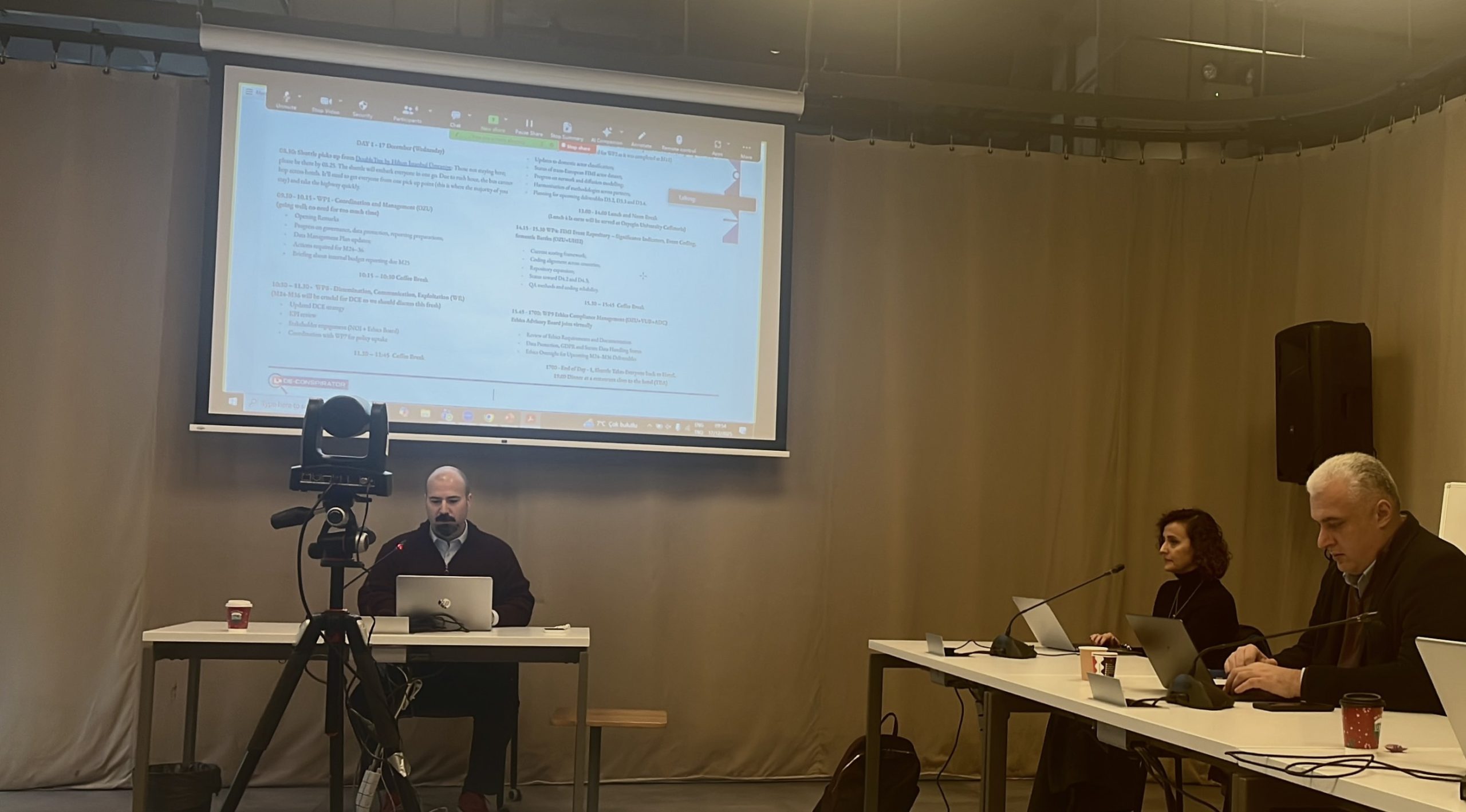
Akin Unver (OZU)
WP8 – Dissemination, Communication, Exploitation
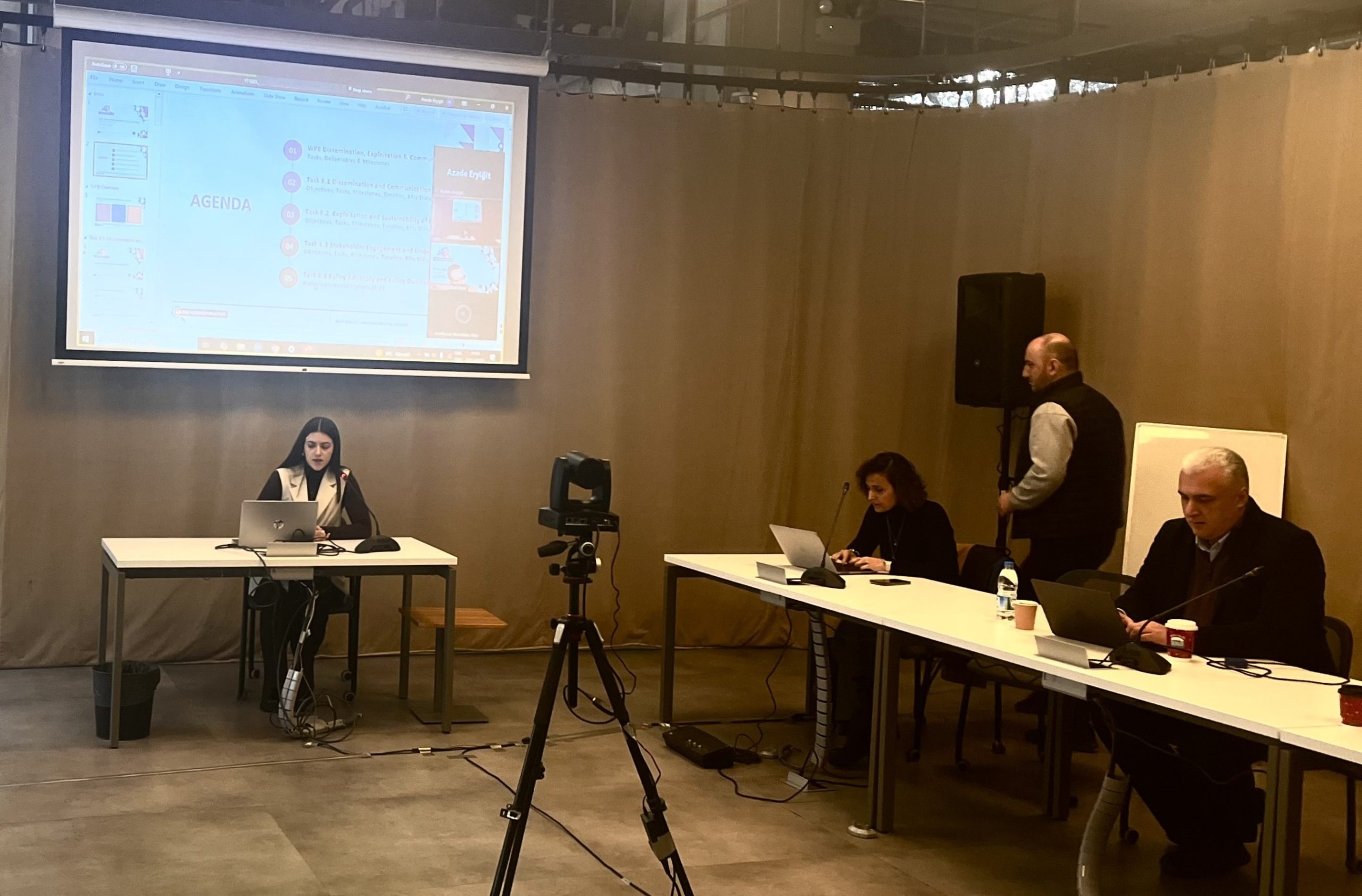
Niki Chatzivasili (WR)
Thomas Bakratsas and Niki Chatzivasili, Dissemination and Communication Managers from White Research (WR), shared important updates on the project’s dissemination communication, and exploitation activities.
The session reviewed performance across digital channels and events, covering website metrics, social media engagement, and event participation.
WP3 – Domestic Spreaders and Trans-European Networks
Elizaveta Gaufman and Rashid Gabdulhakov from the University of Groningen (RUG) together with Bharath Ganesh from the University of Amsterdam (UVA) focused on how disinformation actors, networks, and narratives are identified and analysed across diverse national contexts, highlighting the growing importance of domestic amplification and the need for methodological harmonisation and ethical safeguards.
In this session, analytical workflows were presented to handle growing data volumes, and methodological in alignment with WP4.
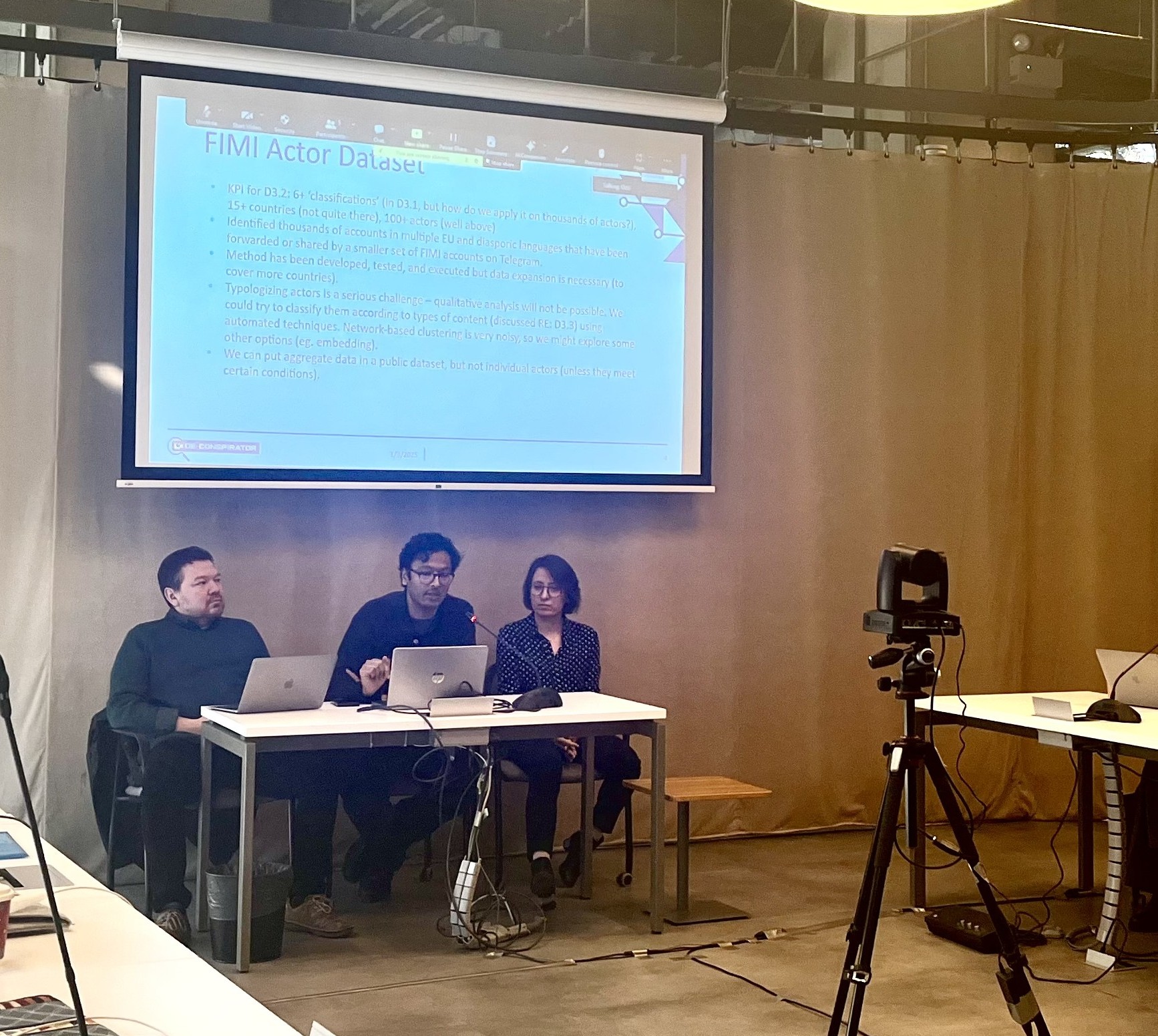
Rashid Gabdulhakov (RUG), Bharath Ganesh (UVA) and Elizaveta Gaufman (RUG)
WP4 – FIMI Event Repository – Significance Indicators, Event Coding
Akin Unver and Âzâde Sel Eryiğit (OZU), led an in-depth discussion on how disinformation narratives are identified, analysed, and assessed across different country contexts, with a focus on strategic keywords, experiences with LLM-supported annotation, and the use of frameworks such as DISinformation Analysis & Risk Management (DISARM).
Dr. Marina Rudyak, Assistant Professor for Chinese Studies from the Heidelberg University (UHEI) contributed insights on semantic battles and narrative contestations involving Russia and China, highlighting challenges for cross-country comparability and quality assurance.
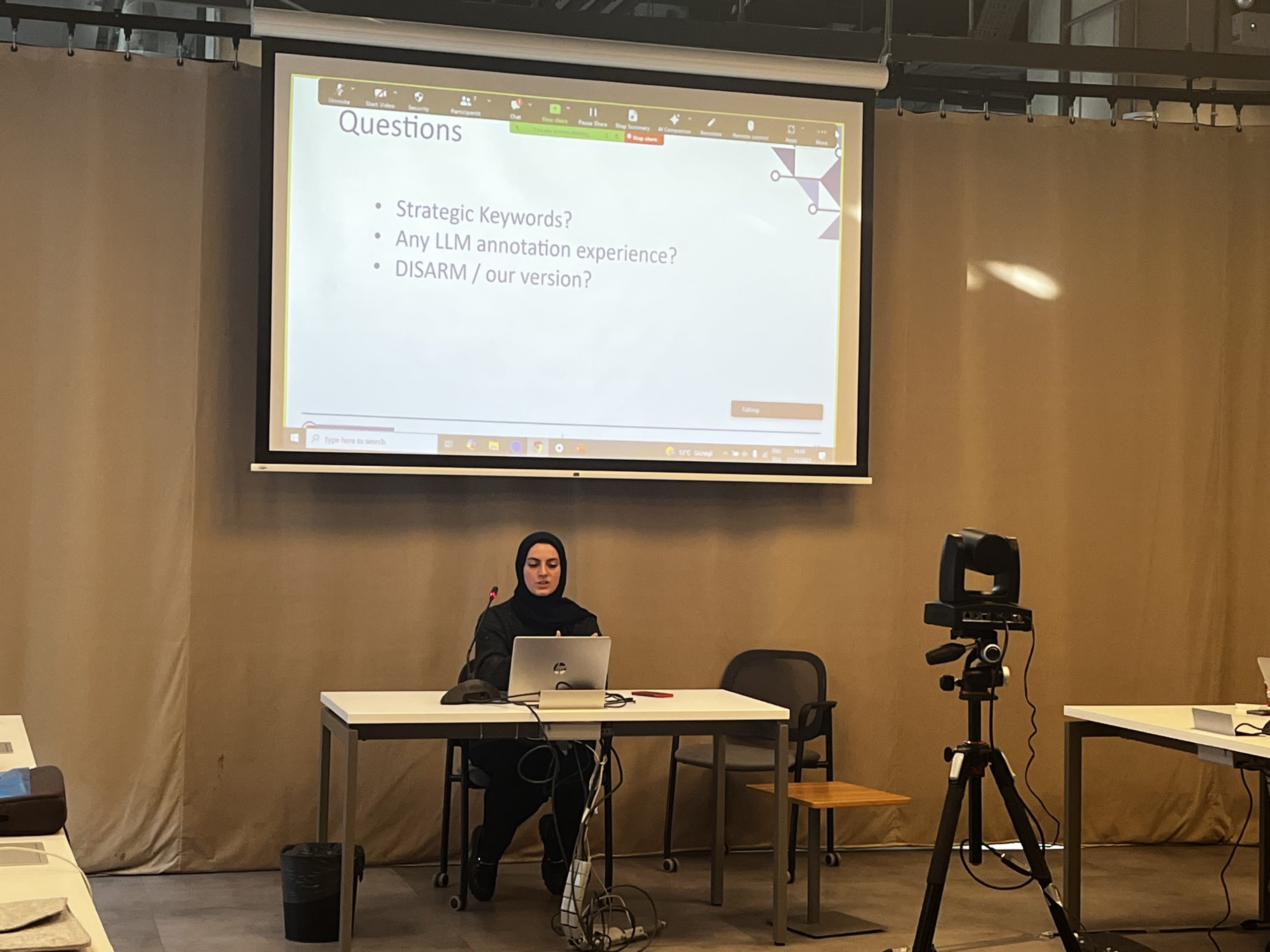
Âzâde Sel Eryiğit (OZU)
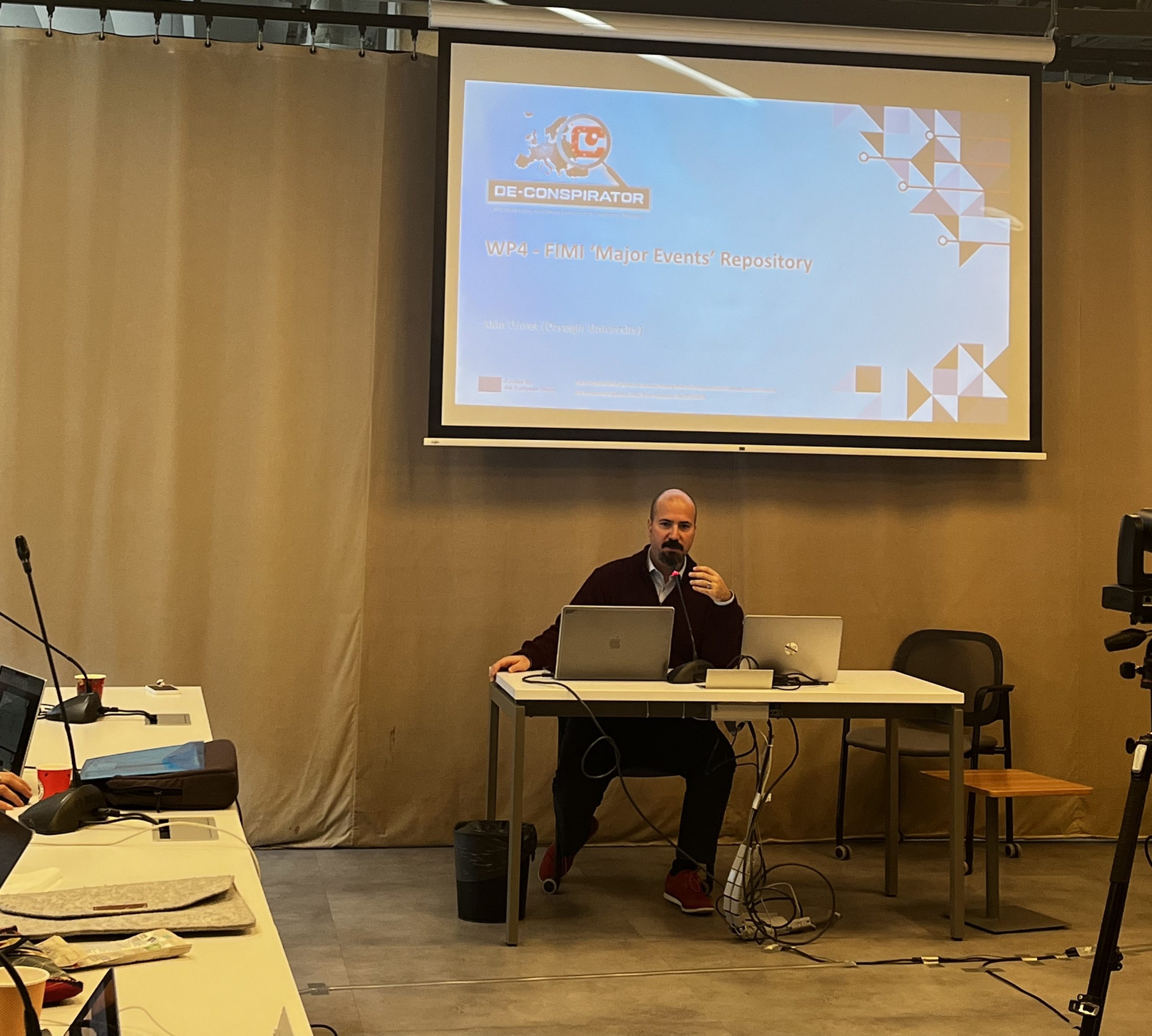
Akin Unver (OZU)
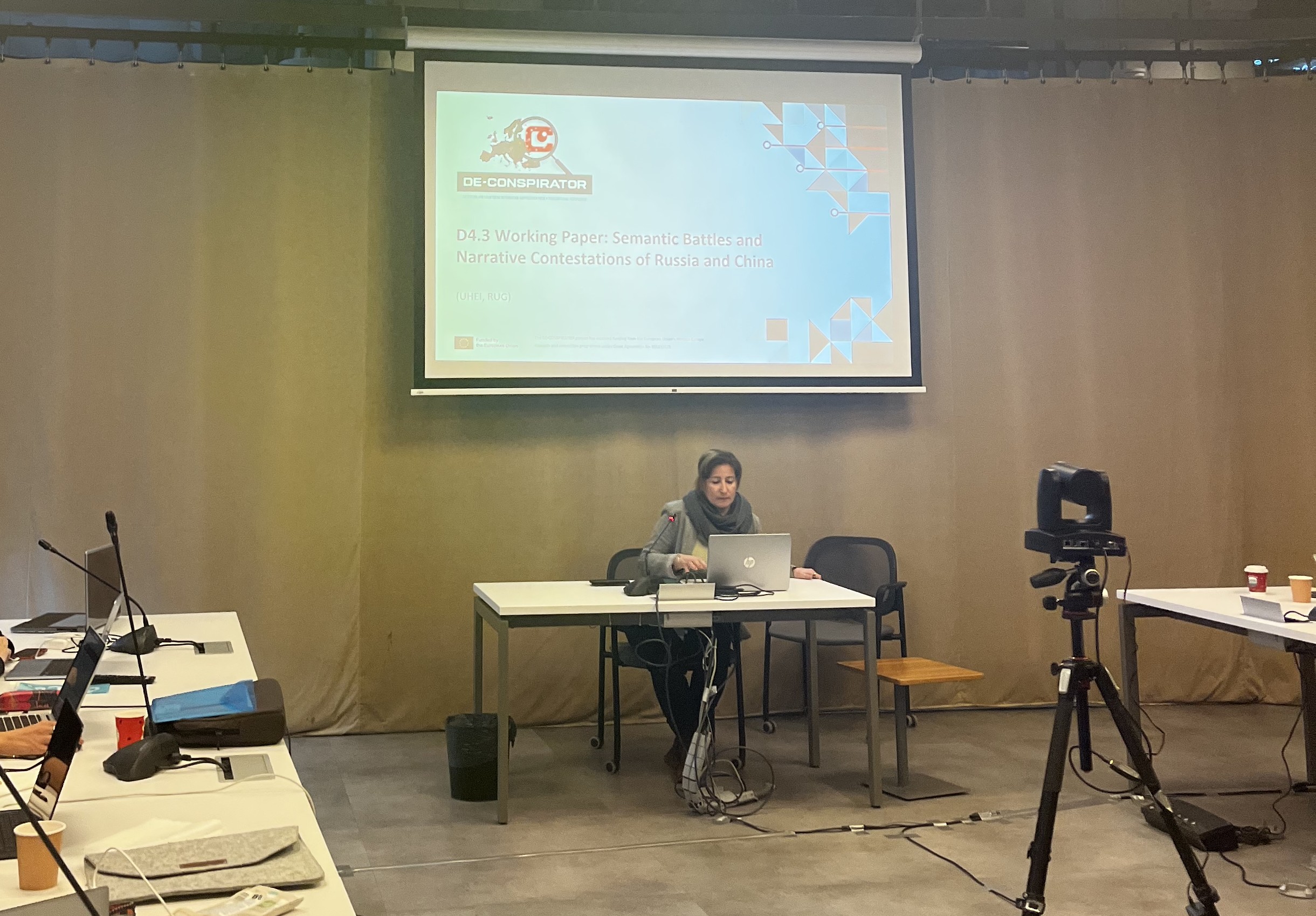
Dr. Marina Rudyak (UHEI)
Members of the DE-CONSPIRATOR Network of Interest (NoI) also joined the discussions, contributing valuable perspectives that enriched the exchange.
The first day concluded with a productive outlook, setting a strong basis for the in-depth discussions of the days ahead.
Day 2: Advancing Methods, Evidence, and Policy Impact
The second day of the Annual Consortium Meeting focused on advancing the project’s empirical, analytical, and policy-oriented work, with partners reviewing progress and aligning priorities for the final phase of the project.
WP5 – Disinfor-meter
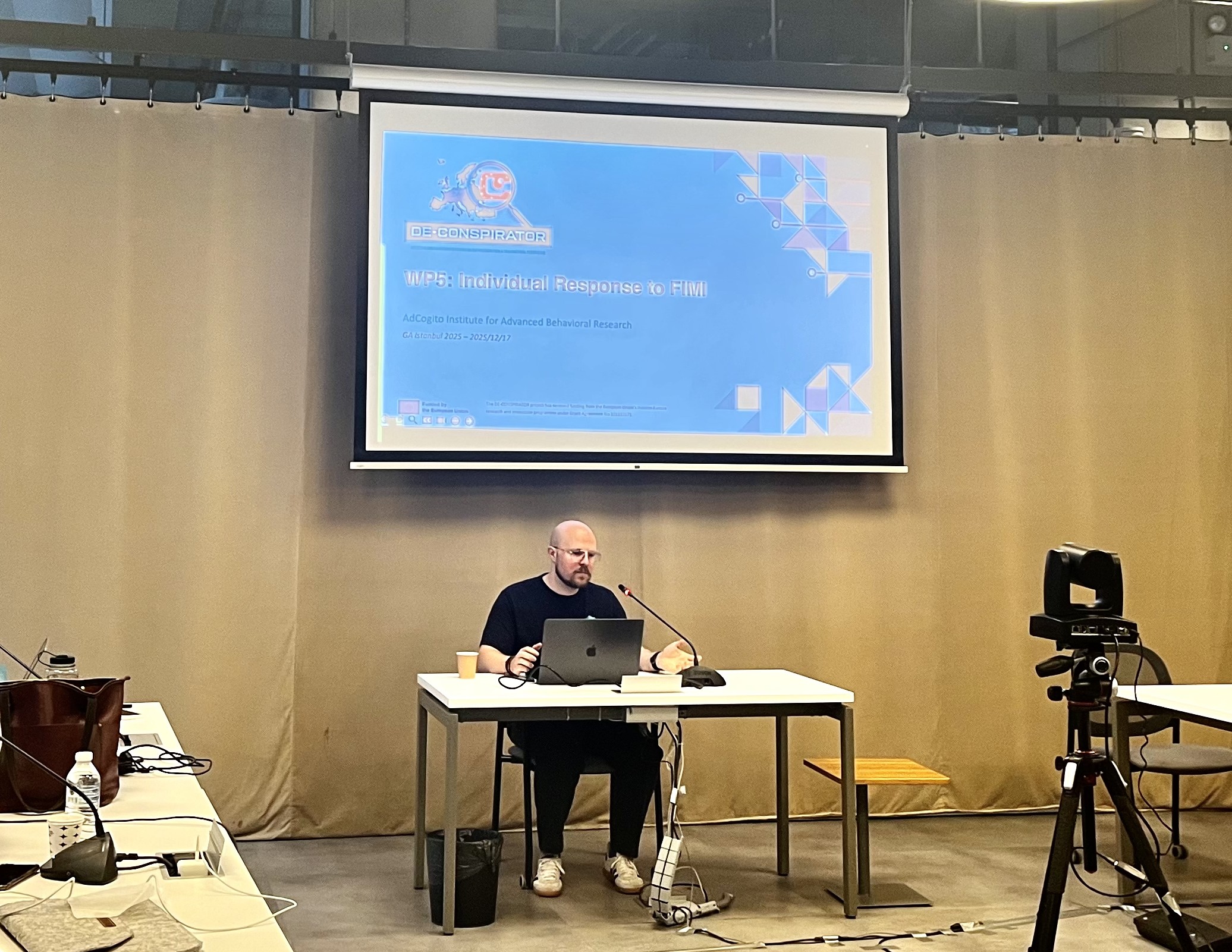
Jannis Kreienkamp (AdCogito)
Jannis Kreienkamp from the AdCogito Institute for Advanced Behavioral Research presented updates on the Disinfor-meter, outlining progress in the validation of a cross-cultural tool designed to assess vulnerability to FIMI.
The discussion highlighted insights from experimental work on how users engage with manipulated content, the limits of awareness-based interventions, and next steps toward refining measurement approaches and preparing the tool for broader, policy-relevant use.
WP6 – Surveys
Rosita Dzhekova, Director, Democracy Shield Task Force at the Center for the Study of Democracy (CSD), presented updates on the large-scale public survey examining the social and collective drivers and effects of FIMI.
Tuba Bircan, Associate Professor of Sociology at the Vrije University (VUB) together with Sabina Imatova (VUB), presented the conjoint experiment and vignette-based survey design, highlighting how the approach captures public perceptions, behavioural responses, and cross-country variation.
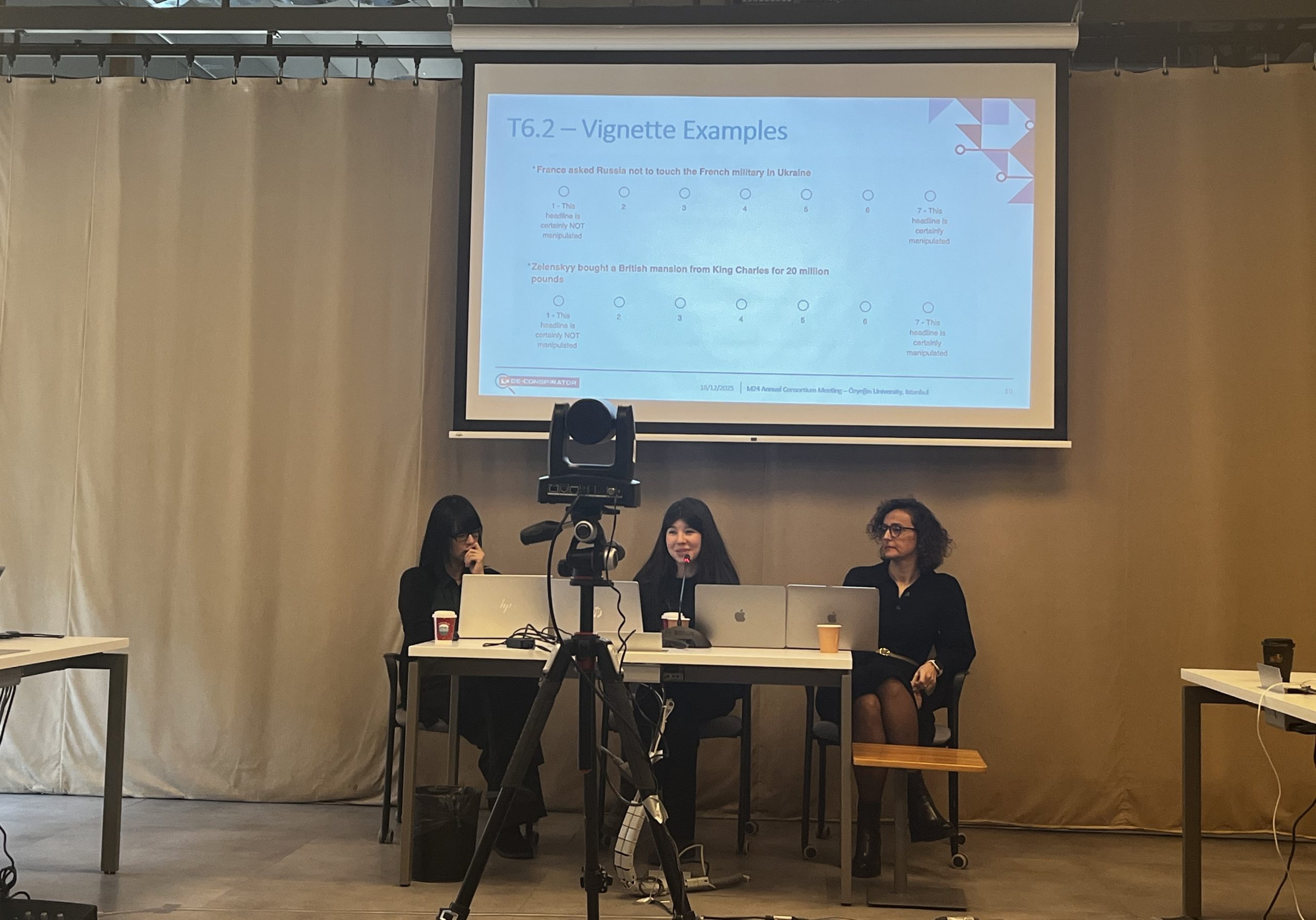
Rosita Dzhekova (CSD), Sabina Imatova (VUB) and Tuba Bircan (VUB)
WP7: Policy Toolkit, Simulation
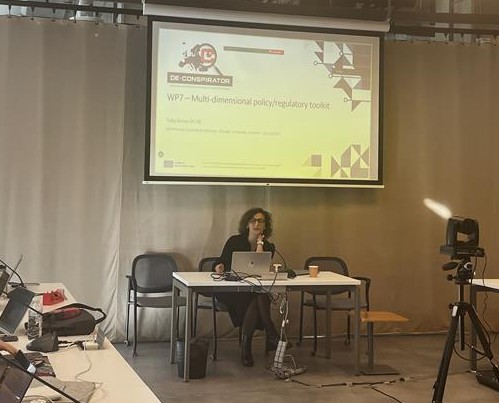
Tuba Bircan (VUB)
Tuba Bircan (VUB) presented the progress on WP7, focusing on the transition from foundational research to actionable policy outputs. With the global counter-FIMI report completed, the work now shifts toward producing EU-oriented policy briefs, stakeholder interviews, and a structured war-gaming simulation to test future scenarios and policy responses.
Partners discussed the need for close coordination with other WPs to integrate empirical findings into the policy toolbox, ensuring coherence and practical relevance for policymakers and institutions.
The day concluded with a wrap-up session bringing together the project partners, Network of Interest (NoI) Members, and the Ethics Advisory Board (EAB), sharing insights, methodological guidance, and strategic input for the next phase of work.
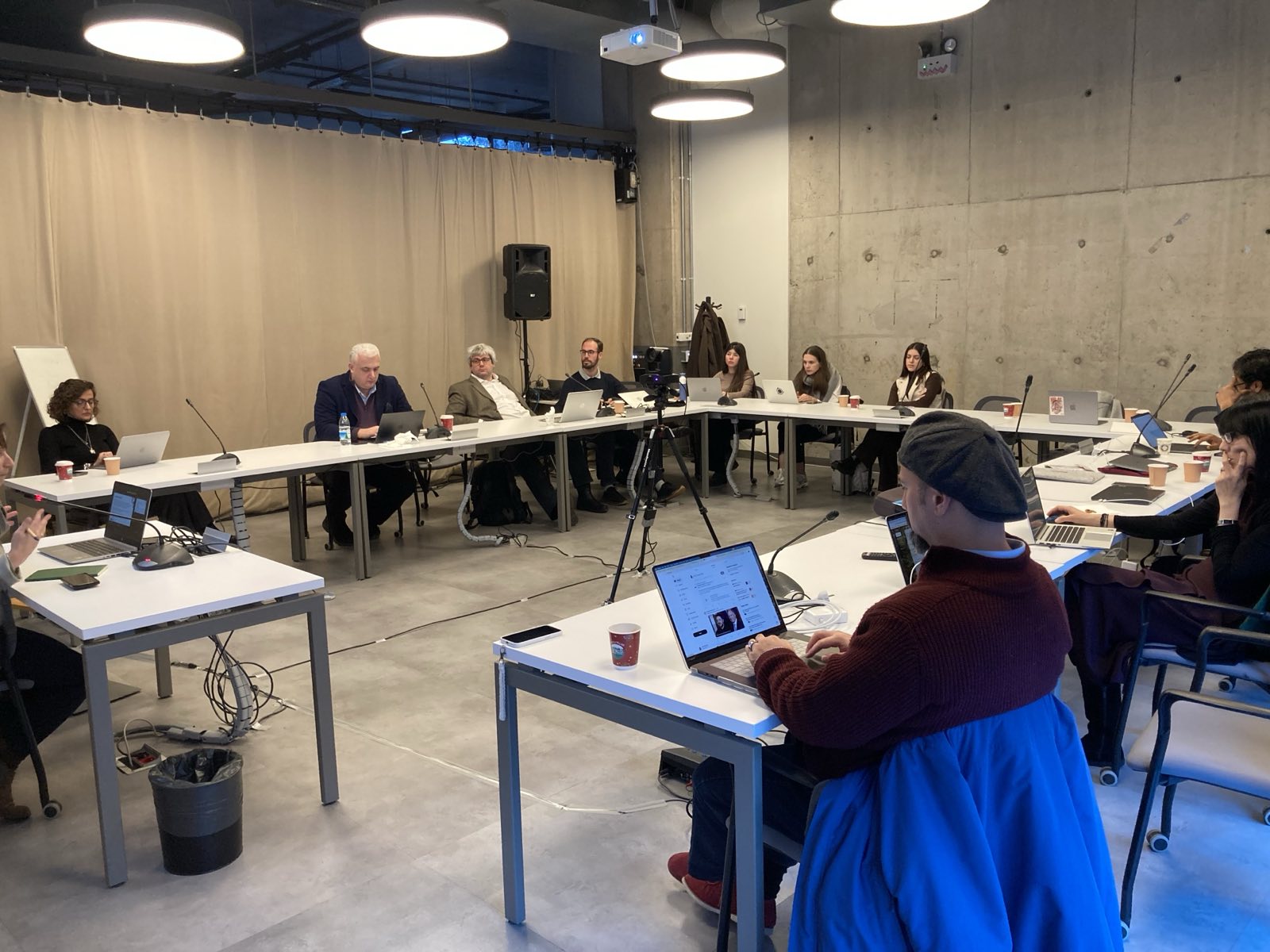
The project has entered its final year, with efforts now focused on delivering the final results and preparing the final conference.
Stay tuned for more!
The DE-CONSPIRATOR project successfully held the Annual Consortium Meeting on 17 – 18 of December 2025, hosted by our Project Coordinator, Akin Unver, at Özyeğin University in Istanbul.
The two-day meeting marked an important milestone for the project, which is entering its final and more intense year, bringing partners together to review progress, discuss deliverables, and align priorities for the final phase of the project.